
Introduction: Vitamin C is a water soluble antioxidant which helps in the formation of collagens, tissue repair and absorptions of plants base iron into bio-available form[1].Since this essential vitamin can not be synthesize or store by humans, it must be obtained through dietary sources specifically fruits and vegetables [2].Vitamin C also plays a crucial role in neurotransmitters production, specifically as a cofactor for the enzymes that converts dopamine to norepinephrine,a vital neurotransmitters for the nervous system [3]. Adequate Vitamin C intake is crucial for long term health,and maintaining sufficient levels can support immune functions, cardiovascular health and cognitive well-being.Despite being a common issue even in developed countries.ensuring enough Vitamin C in dietaries can signicantly contribute to overall health and well-being [4].Vitamin C plays a vital role in various biological process due to its strong antioxidants properties and ability to support enzymes functions by nuetralising free radicals, Vitamin C helps in protecting cell from oxidative damage and stress promoting overall health [5].
Vitamin C deficiency is linked to various factors including environmental, socioeconomic and physiological elements.Region with limited access to fresh product like Finland and Russia,have higher deficiency rate.Conversely, areas with regular consumption of vitamin C rich foods such as China and England shows lower rate. Socioeconomic status signicantly impacts Vitamin C intake, with disadvantaged groups often lacking nutrients rich diet groups who are susceptible to health issues including elderly, children and those with chronic disease such as obesity, cardiovascular disease, diabetes, cancer and HIV, are at the high risk due to increased metabolic damands and poor nutrients absorptions. Life style factors like smoking and excessive alcoholic consumption can further reduce vitamin C level due to heightened oxidative stress [5].
To combat Vitamin C deficiency,effort should be focused on improving access to fresh produce and implementing public health initiatives for high risk groups.While supplement can help, natural foods sources provide better bioavailability [2].Aiming for a dietary intake of around 200mg through a combination of diet and supplement is key to maintaining adequate levels enhancing overall health and minimizing deficiency related complications [6].
Bananas (Musa acuminata), Mangoes (Magnifera indica), and Oranges (Citrus sinensis) are the most commonly fruits consumed in Nigeria and are oftenly promoted as valuable dietary sources of vitamin C[7].However, vitamin C content of these fruits varies widely sometimes depending upon the species types,stage of maturity,clamatic condition and post harvest handling [8]. Apart from biological factors, market and treatment condition such as time of transportation,it exposure to sunlight and vendor storage condition can also lead to oxidative degradation of vitamin C before the fruits reaches consumption [9].
Analytical Methods for Determining Vitamin C
Accurately assessing vitamin C levels in essential field such as nutritional science, public health,and food quality monitoring. While advanced methods like High performance liquid chromatography, enzymatic assays,and voltammetry are commonly applied, iodometry titration remains a preferred technique due to its straight forward procedures,low cost, and reliable accuracy for routine laboratory analysis [10]. Both iodometry titration and 2,6-dichlorophenolindophenol (DCPIP) titrations are widely applied methods for vitamin C determination [11].
Numerous investigations have employed iodometry to compare ascorbic acid levels across fruits samples.For instance study by Masood [12] reported that titrimetric analysis of citrus juice yielded results consistent with those obtained using the DCPIP method.Similarly, study by onyeka in 2022 ,adapted the iodometry procedures for citrus peels, highlighting it’s flexibility in handling drivers samples matrices[13].
Principles of iodometry titration
The iodometry method relies on the strong reducing action of vitamin C. under acidic condition,patassium iodate release iodine in the presence of excess iodite ions.The liberated iodine is then reduced back to iodite by ascorbic acid, which in turn in converted to dehydroascorbic acid [,14] starch is used as an indicator because,it produces a distinct blue complex when iodine is present and the sudden change in colour which is blue that persisted for atleast 20 seconds marks the end of the titration [15]. To avoid errors, the analysis should be carried out with minimal exposure to light and air since both can trigger early oxidation of vitamin C.
Vitamin C in Bananas, Mangoes, and Oranges
Study by Abushusha and Sayed reported that fresh mango juice contained 88.10mg/100mL of vitamin C, while Orange Juice had 53.00mg/100mL[16]. However, processed or packaged juice showed lower level which has been attributed to nutrients losses during processing [17]. In Nigeria, study using Uv-spectrophotometry, Oranges were found to have the highest vitamin concentration followed by mangoes, with bananas containing the least [18].
Vitamin Content in banana
Banana (Musa acuminata) contain relatively low amount of vitamin C, averaging 8.15mg/100 g,yet the remains nutritionally significant in areas where they serve as staple food [19]. Although their vitamin C contribution is smaller than that of citrus fruits and mangoes, they still play a role in supporting dietary balances.Recent nutritional assessment showed that bananas are a modest source of vitamin C when compared with citrus fruits and guava [20]. Data from United State department of agriculture food data center,indicated that raw bananas supply about 8.7-9.0mg of vitamin C per 100 g of edible portion, which represents roughly 10 percent of the daily requirement for adult [21].
Vitamin C content in mango
Mangoes (Magnifera indica), contains vitamin C concentration of about 30.90mg/100g, with values varying according to curtivars and stage of maturity [22].The ascorbic acid content generally increases as the fruits ripens,but may declines when overriped or subjected to poor storage condition [23].
Research has shown that vitamin C levels in mangoes vary considerably among cultivars,the concentration span from 9.79 to 186mg/100 g of fresh pulp, highlighting marked varietal differences.For instanc, Tommy asktins cultivars averaged 19.3mg/100g, Kent contained 25.6mg/100g, whereas Ataufo stood out with a much higher value of 125.4mg/g [24]. Another study also reported that,both genetic and variation and environmental growing conditions can play a key role in shaping the vitamin C composition of mangoes [25] .From nutritional standpoint,a standard serving of one cup (~165g) of fresh sliced mango deliveres about 60-67mg of vitamin C, equivalent to roughly 67% of the recommendation daily intake [26].
Vitamin C content in mango The united states of agriculture(USDA) reported that raw Oranges contained approximately 53.2mgof vitamin C per 100 g.This is consistent with finding from food and Agriculture Organization (FAO),and world health Organization (WHO), highlighting citrus fruits as major contributors to vitamin C intake world wide [27]. Studies have also revealed that, vitamin C content in Oranges can vary between 50-60mg/100g, depending on factors such as type of Oranges, storage condition after harvesting,genetic differences and environmental influences[28].
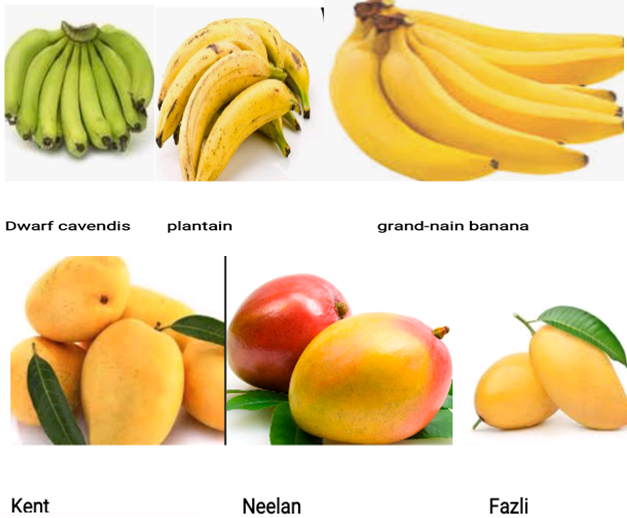
Figure 1: Different species of Bananas and Mangoes
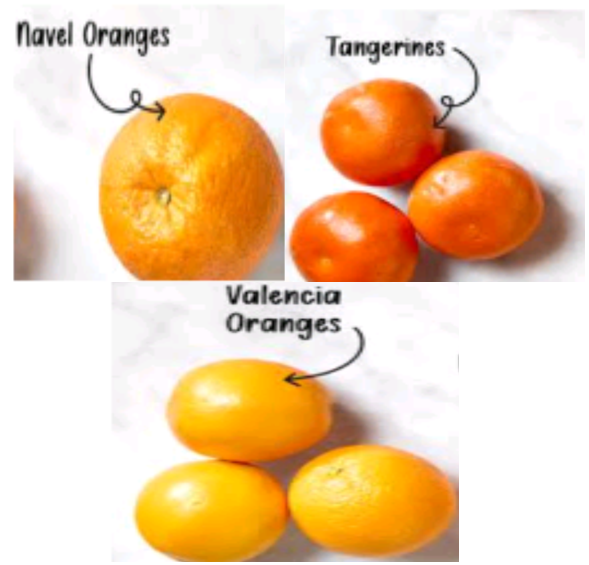
Figure 2: Different species of Oranges
Factors Responsible For Variation Of Vitamin C Content In Fruits
Varietal differences
Varietal differences plays significant role in the variation of vitamin C content in fruits.different fruits varieties have unique genetic make-up,which influence their nutritional content.These genetic differences can result in varying levels of vitamin C, even among fruits of the same species [29].
Ripening stage
The ripening stage of fruits is another crucial factor that affect vitamin C content.As fruits ripens, the vitamin content can change significantly,in some fruits vitamin C level may increase as they ripens, while in others,they may decrease. For example,in citrus fruits like Oranges, vitamin C content tends to increase as fruits ripens,but then may decrease slightly as it becomes overriped [25].
Storage conditions
Storage condition can significantly impact vitamin C content in fruits, proper storage including cool temperature, moderate humidity. Can help minimize vitamin C losses while adverse condition such as ambient high temperature and exposure to light can lead to vitamin C degradation and reduces nutritional value [30].
Materials and Methods
Chemical and Reagents
i. Iodine solution : Iodine solution was prepared according to the standard laboratory procedures by dissolving 5.0 g of potassium iodide and 0.268 g of potassium iodate in 200 mL of water followed by addition of 3 M sulphuric acid. The solution was then diluted to a final volume of 500 mL up to 500 mL[16].
ii. 1% Starch indicator solution: One percent starch indicator solution was prepared by adding 0.50 g of soluble starch in 50 mL of near-boiling water.Solution was mixed and was allowed to cool before used
iii. Distilled water : distilled water was used to prepare the solutions for the analysis
iv. Vitamin C standard solution:Vitamin C standard solution was prepared by dissolving 0.250 g of vitamin C in 100 mL of water and then diluted to 250 mL with water in a volumetric flask and was labeled vitamin C standard solution.
v. Fresh Bananas (Musa acuminata), Mangoes (Magnifera indica).and Oranges ( Citrus sinensis).
Apparatus and equipments
Analytical weighing balance , fruits blender (model: RN-319), beakers (250mL),burette (50mL), Conical flask (250mL), Dropper, measuring cylinder (100mL, 50mL) ,muslin cloth, and Volumetric flask (250mL, 500mL) were used in this study.
Study area
This study was carried out in the department of chemistry, chemistry laboratory, faculty of physical sciences, federal university of Lafia. Lafia is the capital city of Nasarawa state,located in the North Central region of Nigeria. Having the coordinate of Latitude: 8.48333° N or 8°29′30′′ N and Longitude: 8.51667° E or 8°31′0′′ E. Lafia’s population is estimated to be around 402,860 to 403,000 people, according to the United Nations World Populalation Prospects. This number is based on projections for 2025, with a growth rate of 3.79% to 3.87% annually [31].
Sample preparation
Three different species of Bananas(Musa acuminata), Mangoes(Magnifera indica), and Oranges (Citrus sinensis) were selected for this study. The fresh fruits samples were ramdomly purchased from local markets and different selling points within lafia metropolis, Nasarawa state ,North Central of Nigeria.They were then taken to the department of plants science and biotechnology for identification before the analysis.The fruits were chosen based on their ripeness, color, and absence of visible defects. A total of 10 fruit samples were collected for each species, and they were stored in a cool, dry place until analysis.The fruits were thoroughly washed with distilled water before been peeled and chopped, and the juice extracted using fruits blender.The juice were filtered with muslin cloth to remove pulps,seed, and other particles before been stored in well lebelled plastic bottles (n=3) . The fruits were denoted as follows: B1,B2,B3 for first, second and third Banana(Musa acuminata) species, M1, M2, M3, for first, second and third Mangoes(Magnifera-indica ) species and O1,O2,O3 for first,second and third Oranges(Citrus-sinensis) respectively.
Standardizing Solutions and Titration of Juice Samples
Vitamin C solution (25 mL) was transferred into 100 mL conical flask and 10 drops of starch solution was added. This was titrated with the iodine solution until the first blue colour which persisted for about 20 sec was observed. Juice samples (25 mL) were titrated exactly the same way as the standard. The initial and final volume of iodine solution required to produce the colour change at the endpoint was recorded. Titration was performed in triplicate in all cases. Reaction principles
In acidic environment, potassium iodate reacts with excess potassium iodide to liberate iodine, which is subsequently reduced to iodide ions by ascorbic acid present in the fruit sample [32].
KIO3 + 5KI + 3H2SO4 —-> 3I2+ 3K2SO4 + 3H2O (1)
C6H8O6 + I2 ——-> C6H6O6 + 2HI (2)
Calculation of vitamin C content
The vitamin C content (in mg/100mL of sample) was calculated using the formula
{Vitamin C (mg/100mL) = {V ×N × 88.06 × 100/W}.
Statistical analysis
The data were analyzed using statistical software (SPSS version 25). The mean and standard deviation of the vitamin C content were calculated for each fruit species. The results were then compared using analysis of variance (ANOVA) to determine if there were significant differences and ensure that the methods were working correctly.
Quality Control
Quality control measures were taken to ensure the accuracy and reliability of the results. These
measures include
Calibration of equipments: all equipments was calibrated before use to ensure accuracy and precision.
Use of standard and control: Standard and control were used to validate the results and ensure that the method were working correctly.
Replication of samples: Samples were analysed in triplicate to ensure that the results were liable and consistent.
Data entry and verification: Data were entered into a spreadsheet and verified for accuracy and completeness.
Results
Table 1 to 4 presents the results obtained by iodometry titration for the determination of vitamin C Content from different species of bananas, mangoes and oranges sold in Lafia metropolis
Table 1: Vitamin C Content in bananas (Musa acuminata) species
| S/N | Sample code species | Names of bananas | Vitamincontent in (mg/100mL) | |||
| 1 | B 1 | Plantain | 9.82±3.0 | |||
| 2 | B 2 | Grand main banana | 8.73±3.0 | |||
| 3 | B 3 | Dwarf Cavendish | 6.34±0.1 | |||
Table 2: Vitamin C content in mangoes (Magnifera indica) species
| S/N | Sample code | Names of mangoes species | Vitamin C in (mg/100 mL) |
| 1 | M 1 | Fazli | 58.11±9.5 |
| 2 | M 2 | Kent | 34.73±4.0 |
| 3 | M 3 | Neelam | 23.80±2.0 |
Table 3: vitamin C content in oranges (Citrus sinensis) species
| S/N | Sample code | Names of Oranges | Vitamin C content (mg/100mL) |
| 1 | O 1 | Tangerine | 51.07±10.2 |
| 2 | O 2 | Valencia | 39.90±2.1 |
| 3 | O 3 | Navel | 33.67±4.0 |
Discussion
The concentration of vitamin C in bananas is given in Table 1.The values obtained ranged between 6.34±1.0mg/100 mL and 9.82±3.0mg/100mL, indicating that bananas contain comparatively low concentration of ascorbic acid.This observation is consistent with previous report which placed banana vitamin C at approximately 8-9mg/100g fresh weight [33].
Although bananas are not rich sources of vitamin C,they remain important in diet where they are consumed frequently and in large quantities, serving as supplementary contributors to daily ascorbic acid intake [34].the relatively narrow range observed among the species suggest that varietal influence on vitamin C content in bananas is limited compare to mangoes and oranges.
Table 2 indicated that mangoes species contained markedly different levels of vitamin C concentration ranging between 23.80±2.0mg/100mL and 58.11±9.5 mg/100 mL. This variation underscore the significant effects of genotype on ascorbic acid levels in mangoes.[26]. reported that mangoes pulp vitamin C varies widely, from as 9.8 mg/100g to as high as 186 mg/100g depending on the cultivars, growing conditions and post harvest handling.
Similarly, study by Shafqat demonstrated distinct differences among south Asian cultivars, with Fazli and langra generally exhibiting higher vitamin C content compared to other mangoes types[35].variability has also been attributed to ripening stage as vitamin C concentration typically decreases with increasing fruits maturity [35].
Table 3 indicated that Oranges species had vitamin C content ranging from 33.67±4.0mg/100 mL to 51.07±10.2mg/100mL.This values are consistent with those reported in standard nutrients data base,which listed oranges at approximately 53mg/100g [36].The results also supported earlier findings by ramful and other scientists who reported that Tangerine generally contains higher vitamin C levels than navels or Valencia orange[37].
The observed differences among oranges may be linked to both genotype variation and agronomics condition according to study by Lee and Kader[38]. Factors such as harvest time, degree of ripeness,and environmental stress significantly affect vitamin C accumulation in citrus fruits. Additionally, handling and processed method have been shown to reduced vitamin C retention particularly if fruits are stored for long period at ambient temperature [39].
Conclusion
The determination of vitamin C content in different species of bananas, mangoes, and oranges revealed a clear variations among the fruits analysed.The observed variation can be attributed to several factors, including species differences, ripening stage, post-harvest handling and storage condition.This study therefore underscore the nutritional significant of bananas, mangoe, and oranges as important dietary sources of vitamin C.
This research also confirm the effectiveness of iodometry titration as reliable, simple,and cost-effective method for determination of vitamin C content in fruits.
Recommendation
Based on this finding, it is recommended that individuals consume vitamin C-rich Fruits like Mangoes and Oranges regularly, handle these fruits properly to preserve nutrient content and support public health campaign, promoting vitamin C-rich diets to combat deficiencies.Further research using advanced analytical techniques is also suggested
Acknowledgements
I sincerely thank my supervisor,Dr. U.Abel Agustine,and the Department of chemistry, federal University of Lafia for their guidance and support.I also appreciate the contribution of my colleague,and to the entire university management for the enabling environment for this research, special thanks to the reviewers for their valuable feedback.finally, I acknowledge the encouragement and support of my beloved parents throughout this research work.
Funding
There is no funding or financial support for this research work
Conflict of interest
The authors declared no conflict of interest
Reference
[1] National institutes of health.NIH (2025). Vitamin C-Health professional fact sheet.U.S.Department of Health and Human services.http://ods.od.nih.gov/fact sheet/vitamin C-Healthprofessional/
[2] Popescu,M.,Vasile, A., and Petrescu,l. (2024). Vitamin C determination in foods: Titrimetry method – A review.Journal of Agroalimentary processes and Technologies, 30(30),471-476.
[3] See X.Z., Yeo W.S., Saptoro A. A comprehensive review and recent advances of vitamin C: Overview, functions, sources, applications, market survey and processes. Chem. Eng. Res. Des. 2024;206:108129. doi: 10.1016/j.cherd.2024.04.048. [DOI] [Google Scholar]
[4].Chisnall M., Macknight R. Importance of Vitamin C in Human Health and Disease. In: Hossain M.A., Munné-Bosch S., Burritt D.J., Diaz-Vivancos P., Fujita M., Lorence A., editors. Ascorbic Acid in Plant Growth, Development and Stress Tolerance. Springer International Publishing; Cham, Switzerland: 2017. pp. 491–501. [Google Scholar]
[5] Njus D., Kelley P.M., Tu Y.-J., Schlegel H.B. Ascorbic acid: The chemistry underlying its antioxidant properties. Free Radic. Biol. Med. 2020;159:3743. doi: 10./j.freeradbiomed.2020.07.013. [DOI] [PubMed] [Google Scholar]
[6] Carr A.C., Rowe S. Factors Affecting Vitamin C Status and Prevalence of Deficiency: A Global Health Perspective. Nutrients. 2020;12:1963. doi: 10.3390/nu12071963. [DOI] [PMC free article] [PubMed] [Google Scholar]
[7] .Carr A.C., Lykkesfeldt J. Factors Affecting the Vitamin C Dose-Concentration Relationship: Implications for Global Vitamin C Dietary Recommendations. Nutrients. 2023;15:1657. doi: 10.3390/nu15071657. [DOI] [PMC free article] [PubMed] [Google Scholar]
[8] Maldonado-Celis, M. E., Yahia, E. M., Bedoya, R., Landázuri, P., Loango, N., Aguillón, J., and Restrepo, B. (2023). The contribution of mango fruit (Mangifera indica L.) to human nutrition and health. Journal of Functional Foods, 114, 105165.
[9] Mehta, S., Sharma, R., and Kumar, P. (2024). Vitamin C variation in citrus in response to genotypes, storage duration, and temperature: A response surface meta-analysis. Horticulturae, 10(3), 212.
[10] Raman, S., and Kumar, A. (2023). Different methods used for determination of vitamin C: A review. International Journal of Current Microbiology and Applied Sciences, 12(1), 265275.
[11] De Carvalho, T. B., Garcia, R., and Silva, P. (2018). Validation of iodometric titration method for determination of vitamin C in fruit pulp: Reproducibility and accuracy. Journal of Analytical Methods in Chemistry, 2018, 5012375. https://doi.org/10.1155/2018/5012375
[12] Masood, Z., Ali, S., and Sultana, N. (2015). Estimation of vitamin C content in artificially packed juices of two citrus fruits by iodometric titration. Biological Forum An International Journal, 7(2), 735739.
[13] Onyeka, E. O., Okoro, U. M., and Ezema, A. (2022). Rapid titrimetric determination of ascorbic acid in citrus peels using modified KIO₃/KI titration. Annals of Food Science and Technology, 23(1), 15–25.
[14] AOAC International. (2022). Official methods of analysis (22nd ed.). AOAC International.
[15] Harris, D. C. (2017). Quantitative Chemical Analysis. 9th ed. New York, NY: W.H. Freeman and Company. ISBN: 978-1-319-10137-1
[16] IUPAC. (2019). Iodometric titration: Recommendations on best practices. Pure and Applied Chemistry, 91(4), 601612.
[17] Abushusha, S., and Sayed, S. (2016). Comparative analysis of vitamin C content of some locally available packed and fresh fruit juices by redox titration method. International Journal of Advanced Research, 4(9), 12591265.
[18] Martínez, M., and Rodríguez, B. (2021). Degradation of ascorbic acid during juice processing and storage: A kinetic modeling approach. LWT Food Science and Technology, 136, 110361. https://doi.org/10.1016/j.lwt.2020.110361
[19] Wojcik, M., Kazimierczak, P., Vivcharenko, V., Koziol, M., and Przekora, A. (2021). Effect of Vitamin C/Hydrocortisone Immobilization within Curdlan-Based Wound Dressings on in Vitro Cellular Response in Context of the Management of Chronic and Burn Wounds. International Journal of Molecular Sciences, 22(21), 11474.
[20] Nwoba, E. R., and Chukwu, N. L. (2023). Influence of banana cultivar on vitamin C concentration and antioxidant capacity. Journal of Plant and Food Research, 10(3), 200–212.
[21] NatureClaim. (2024, May). Banana nutrition facts. Retrieved from https://natureclaim.com/nutrition/info/banana/
[22] FoodStruct. (2023, October 31). Bananas nutrition facts. Retrieved from https://foodstruct.com/food/bananas
[23] Ravani, A., and Joshi, D. C. (2013). Mango and its by-products utilization: A review. Trends in Postharvest Technology, 1(1), 5567.
[24] Bourgeois, S., and Alvarenga, H. (2019). Vitamin C levels in tropical fruits harvested at different maturity stages. Journal of Tropical Agriculture, 56(2), 112119.
[25] Adejumo, K., and Olabisi, O. (2022). Effect of ripening stage and storage period on vitamin C retention in mangoes and oranges. Nigerian Journal of Agricultural Sciences, 33(1), 145156.
[26] Maldonado-Celis, M. E., Yahia, E. M., Bedoya, R., Landázuri, P., Loango, N., Aguillón, J., Restrepo, B., and Escobar, S. (2019). Chemical composition of mango (Mangifera indica L.) fruit: Nutritional and phytochemical compounds. Frontiers in Plant Science, 10, 1073. https://doi.org/10.3389/fpls.2019.01073
[27] Healthline. (2022). Mango: Nutrition, benefits, and how to eat it. Retrieved August 21, 2025, from https://www.healthline.com/nutrition/mango
[28] WHO and FAO. (2004). Vitamin and mineral requirements in human nutrition (2nd ed.). World Health Organization.
[29] Ballistreri, G., and Amenta, M. (2021). Citrus fruits: Nutritional composition and health benefits. Molecules, 26(13), 4015. https://doi.org/10.3390/molecules26134015
[30] Salama, R., and Al-Hadhrami, S. (2021). Variability in ascorbic acid levels across banana varieties grown under distinct climatic conditions. Environmental and Experimental Botany, 179, 104237. https://doi.org/10.1016/j.envexpbot.2020.104237
[31] Kuete, V., Mokake, V., and Ndjakou, L. (2020). Effect of postharvest handling on vitamin C in citrus and tropical fruits sold in African markets. Postharvest Biology and Technology, 162, 111121. https://doi.org/10.1016/j.postharvbio.2019.111121
[32] AOAC (2019). Official Methods of Analysis of AOAC International. 21st ed. Rockville, MD: Association of Official Analytical Chemists International. ISBN: 978-0-935584-93-4.
[33] Wikipedia (2024). Lafia. In: Wikipedia. Available at: https://en.wikipedia.org/wiki/Lafia (Accessed: 30 August 2025).
[34] USDA (United States Department of Agriculture). (2022). FoodData Central: Bananas, raw. U.S. Department of Agriculture. Retrieved from https://fdc.nal.usda.gov
[35] Oyetade, O. A., Oyeleke, G. O., Oyewole, O. E., & Adegoke, B. M. (2012). Stability studies on ascorbic acid (Vitamin C) from different sources. Journal of Applied Chemistry, 1(2), 20–24.
[36]Shafqat Ali, S. A. (1992). Comparative analysis of physicochemical parameters in mango cultivars grown in Pakistan. Pakistan Journal of Botany, 24(2), 159–164.
[37]] Lee, S. K., and Kader, A. A. (2000). Preharvest and postharvest factors influencing vitamin C content of horticultural crops. Postharvest Biology and Technology, 20(3), 207220. https://doi.org/10.1016/S0925-5214(00)00133-2
[38] Ramful, D., Tarnus, E., Aruoma, O. I., Bourdon, E., & Bahorun, T. (2011). Polyphenol composition, vitamin C content and antioxidant capacity of Mauritian citrus fruit varieties. Food Research International, 44(7), 2088–2099.
[39] Favell, D,J,(1998) “A Comparison of vitamin C content of Fresh and Frozen vegetables.” Food chemistry, Vol, 62 (1), 59-64. http:// doi.org/10.1016/ SO308-8146(97)00165-9.
Pingback: vibramycin eye drops
Pingback: lamotrigine 25 mg
Pingback: misoprostol
Pingback: clozaril
Pingback: vidalista 40mg side effects
Pingback: domperidone gastroparesis
Pingback: semaglutide doses
Pingback: semaglutide vs tirzepatide muscle loss reddit
Pingback: ketoconazole medical overview
Pingback: Brand vs Generic Shelf Life
Pingback: sildenafil educational resource